Rome2Rio: Travel Route Planner
- 4.6
- Rating
- 1.00M
- Installs
- Free
- Price

 Analysis by App-foxy
Planning a journey across several types of transport can become surprisingly tiring. I have often found that the hard part is not choosing a destination, but working out how to connect a train, bus, ferry, or local service without opening a dozen separate apps. Rome2Rio: Travel Route Planner is built around that exact problem. It is a free travel and local app from Rome2Rio Pty Ltd that helps me explore routes between places, particularly when the trip crosses transport networks that do not naturally appear together in one operator’s app.
My experience with it is best described as a strong starting point rather than a final authority. It gives a broad view of how a trip might work, which is especially useful when I am still comparing possibilities. At the same time, the usefulness of that overview depends on connectivity, current transport information, and my willingness to verify the important details before leaving. That balance matters: the app can reduce planning friction, but it does not remove the need for normal travel judgement.
How Rome2Rio feels when the journey depends on a connection
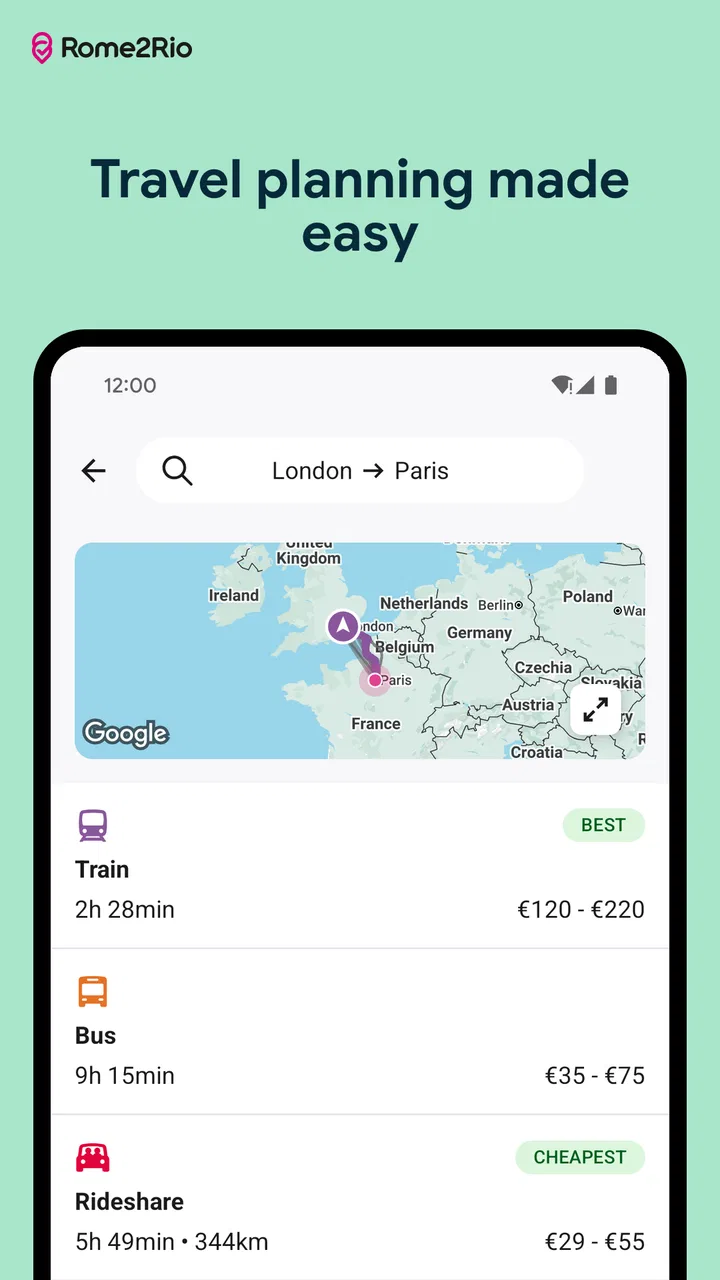
The app’s main strength appears when a route is not simple. If I already know the exact train operator and departure station, the operator’s own app may be more direct. But if I am trying to travel from one city to another and do not yet know whether rail, coach, ferry, or a mixture of services makes the most sense, Rome2Rio gives me a useful map of the decision.
You May Also Like

 Blood Strike: 2.5 Anniversary
Blood Strike’s Loadouts Turn Every Drop Into a Tactical Gamble
A close look at Blood Strike’s custom loadouts: how fast access to signature weapons reshapes its battle royale rhythm, rewards preparation, and narrows the gap between fights.

 Pandora - Music & Podcasts
Pandora’s Music Is Easy to Start, but Harder to Recover
Pandora’s strength is its low-effort path from a seed to a station. Its weak spot is how much confidence it asks you to place in connection, setup, and quiet recovery.

 8 Ball Pool
 Is Built on Rivalries, Rematches, and Routine
A close look at the rivalries, rematches, shared routines, and unanswered safety questions that turn a quick pool match into a persistent mobile community.

 Samsung Music
’s Quiet Strength Is Playing What You Already Own
Its reach comes less from spectacle than from dependable access to a personal library. That simplicity is both the app’s strongest retention engine and its ceiling.

 AccuWeather: Weather Radar
AccuWeather Review: A Quick, Clear Forecast for Everyday Decisions
For everyday plans, the best forecast is the one you can understand quickly. AccuWeather makes rain timing, radar, and local conditions easy to act on, with a few trade-offs.

 Hill Climb Racing
Why Hill Climb Racing Still Turns Crashes Into One More Run
A tiny car, a bumpy hill and one more upgrade: Hill Climb Racing keeps resurfacing because its simple chaos makes every near-miss feel personal.
More From Our News Desk



I can enter a starting point and destination and then compare the broad transport patterns available between them. That is more valuable than it may sound. A normal map app may emphasize driving or walking, while an individual transport company naturally focuses on its own network. Rome2Rio is more helpful at the discovery stage because it encourages me to think in terms of the whole trip rather than one company’s route.
The experience is particularly useful for unfamiliar regions. I might know the name of the town where I want to stay but have no idea which nearby airport, station, or port is practical. The app helps me investigate those relationships before I commit to accommodation or tickets. I can also use it to see whether a seemingly short journey involves an awkward transfer that would be easy to overlook on a basic map.
Connectivity shapes this process from the first search. Route planning requires the app to retrieve information, so I get the best results when I have a stable internet connection. In a hotel, airport, or home environment, that is usually straightforward. On a moving vehicle, in a rural area, or near a border, the experience can become less predictable. I would not treat a successful search before departure as proof that every part of the route will remain equally accessible later.
Why broad route discovery is more useful than it first appears
One of my favorite ways to use the app is before I have fixed the details of a trip. Instead of asking, “What is the fastest route?” I use it to ask, “What kinds of routes are realistic from here?” That change in approach often reveals a better planning path. A ferry connection may make a coastal journey more interesting, while a bus-and-train combination may avoid an expensive or inconvenient transfer through a major city.
This is also where the app differs from relying only on a familiar maps service. Maps are excellent for street-level navigation and immediate directions, but they can make long-distance public transport feel fragmented. Rome2Rio is more comfortable at the stage where I am comparing transport modes and trying to understand the shape of a journey. Once I have chosen an option, I still prefer to check the actual operator for booking rules, departure changes, luggage conditions, and boarding instructions.
That two-step workflow is important. I use Rome2Rio for discovery and comparison, then move to the relevant carrier or station information for confirmation. Treating the route planner as a complete ticketing replacement would create the wrong expectations. Its value is in helping me decide what to investigate, not in making every later travel task disappear.
Using it in realistic mobile situations
On a phone, the app makes the most sense when I am away from a desk and need to make a practical decision quickly. Imagine arriving in a city after a delayed flight, with several possible onward destinations and no clear idea whether the nearest station is actually the best departure point. I can search the journey, compare the broad alternatives, and identify which transport hubs deserve closer attention.
Another useful situation is a day trip where the return journey is less obvious than the outward one. I might find a convenient morning connection but discover that the evening options use a different combination of services. Checking both directions separately helps me avoid the common mistake of planning only the attractive half of a trip. I also like using the app before leaving accommodation, while I still have reliable connectivity, rather than waiting until I am standing on an unfamiliar platform.
The mobile context introduces a trade-off. A phone is convenient, but it also has a smaller screen and is more vulnerable to low battery, weak signal, and distractions. I find the app most effective when I use it to make a short list of decisions: which station, which transport mode, which connection, and which details need checking. I do not want to depend on repeatedly searching from a crowded terminal where the network may be overloaded.
For that reason, I write down or capture the essential parts of a confirmed plan in a way I can access easily. I am not assuming that Rome2Rio itself will provide offline access to everything I may need. Instead, I treat connectivity as part of the preparation. The app helps me create the plan while online; I then make sure the key departure information is available through the appropriate confirmed source.
What happens when the first plan fails
Travel rarely follows the first search perfectly. A departure can sell out, a connection can become inconvenient, or a delay can make the original transfer unrealistic. Rome2Rio is useful in these moments because it encourages me to look at the route as a group of alternatives rather than a single chain that either works or fails.
If a rail option no longer suits me, I can return to the broader journey and consider whether a coach, ferry, or different interchange changes the situation. This is more productive than searching the same operator repeatedly and hoping a new result appears. The app is especially helpful when I am flexible about the transport mode but not about the destination or approximate arrival time.
There is a practical recovery technique I recommend: search from the place where the problem occurs, not always from the original starting point. If I miss a connection in a large city, I want to understand how to continue from that city or station. Rebuilding the entire journey can hide useful local alternatives. Starting again from the current location gives me a clearer picture of the next decision.
Connectivity becomes critical during recovery. A route search made before a disruption may no longer reflect the situation after it. If I have no signal, the app cannot be my only fallback. I keep the names of important stations, the destination, and any confirmed booking details accessible separately. This is not a criticism unique to Rome2Rio; it is simply the reality of using a connected planning tool during a moving trip.
I also avoid assuming that a route shown in a planner guarantees a seat, a ticket, or a workable transfer. A route can be technically possible while still being a poor choice if the connection is tight, the station is far from the city center, or the service has special booking requirements. The app helps me notice possibilities; my own judgement decides whether they are sensible.
Using the app without wasting mobile data
Because the service depends on searches and route information, I use it more carefully when I am traveling with limited mobile data. I prefer to do broad exploration while connected to dependable Wi-Fi, then narrow the search once I know the relevant places. Repeatedly entering large, exploratory searches while moving between destinations is less efficient than preparing the main alternatives in advance.
A good workflow is to separate research from confirmation. First, I compare the available transport patterns. Next, I note the stations, ports, or airports involved. Finally, I check the selected option with the relevant transport provider. This reduces unnecessary back-and-forth and prevents me from using the route planner as a live timetable substitute when a direct operator source is more appropriate.
I also avoid searching with vague place names when a precise location is available. A city may have several stations or terminals, and choosing the wrong one can produce a route that looks attractive but creates an inconvenient local transfer. Entering the actual accommodation, neighborhood, or terminal gives me a more realistic sense of the first and last part of the journey. That is one of the simplest ways to get more value from the app.
When connectivity is poor, I prioritize decisions that cannot wait. I do not spend time comparing every possible variation. I identify the next safe step, such as reaching a known transport hub, and then investigate the longer route once the connection improves. This makes the app a practical aid rather than another source of information overload.
Who will get the most from Rome2Rio
I would recommend it most strongly to travelers who cross transport systems, visit unfamiliar places, or have not yet decided how to make a journey. It is also a good fit for people who prefer comparing the overall shape of a trip before committing to a particular operator. Families, independent travelers, and visitors planning regional day trips can all benefit from seeing alternatives in one place.
It is less essential for someone who travels a familiar route every week and already knows the exact service to take. In that case, a local transit app or the operator’s own application may provide more precise departure information with fewer steps. It may also be the wrong first choice for a traveler who expects one app to handle every ticket, real-time disruption, platform instruction, and payment task.
The app is free and suitable for everyone, which makes it easy to try without turning the decision into a financial commitment. Its Android listing shows over one million installs, a 4.6 average from roughly six thousand ratings, and a substantial body of user feedback. Those figures suggest that it has found a real audience, although popularity does not change the need to validate a time-sensitive journey.
Rome2Rio Pty Ltd has maintained the app as a travel and local tool since its release on February 29, 2016. The current version is 2026.08.07, and it supports Android 6.0 and later. For me, those details matter less than the basic question of whether the app fits my planning style: it suits exploratory, multi-modal planning much better than routine, single-operator travel.
Where it sits beside familiar alternatives
Compared with a standard map application, Rome2Rio gives transport comparison a more central role. A maps app may be better once I am walking through a station district or following turn-by-turn directions. Rome2Rio is better earlier, when I am deciding whether the journey should be by train, bus, ferry, or a combination.
Compared with an operator’s own app, it offers wider perspective but usually less authority over the final transaction. The carrier knows its own ticket rules, live service notices, and boarding process best. My preferred combination is therefore not either-or: I use Rome2Rio to find the likely route family, then use the operator or official transport source to confirm the details that could affect my departure.
Compared with manually searching the web, the app reduces the mental work of assembling a route. I do not have to begin with the assumption that I know the correct station or transport company. The trade-off is that a broad result can encourage overconfidence if I fail to inspect the individual segments. The more complicated the journey, the more valuable the overview becomes—and the more important final verification becomes too.
Small habits that make the planner more dependable
I get better results when I search the complete journey first, then test individual sections. This shows me the overall structure before I become attached to one attractive segment. If the full route involves an uncomfortable transfer, I can investigate a different starting hub rather than optimizing only the middle of the trip.
I also compare the outward and return journeys independently. Transport networks often behave differently in each direction, and an easy arrival does not guarantee an easy departure. For day trips, this habit can prevent a late return from becoming the most stressful part of the day.
Another useful habit is to leave room around transfers. A route that works perfectly on paper may be unsuitable if I need to change stations, collect luggage, or navigate an unfamiliar terminal. I use the app to identify the connection, then judge it against the realities of my travel party and baggage. This is particularly important when the route combines different operators or transport modes.
Finally, I prepare for a connectivity gap before I need the app most. I search while online, confirm critical information through the relevant provider, and keep the names of the next transport points available in a simple note. That workflow preserves the app’s convenience without pretending that a phone signal will always be present.
My connectivity verdict
Rome2Rio is a genuinely useful route-discovery companion, especially when a trip involves more than one transport mode or when I am unfamiliar with the local network. Its greatest contribution is not replacing every travel service; it is helping me see possibilities that I might otherwise miss. That broader view can save time during planning and make a complicated journey feel more understandable.
Its main limitation is equally clear: the experience is strongest when I am connected and still planning, not when I am already stranded without reliable access. I would not rely on it as my sole emergency plan, and I would not treat every route result as a confirmed booking or live guarantee. Used alongside official transport information, however, it gives me a practical way to compare routes and recover when the obvious option is not the best one.
My recommendation is simple: install it if you regularly plan unfamiliar or multi-stage journeys, and use it early enough to make informed choices. Keep a specialist operator app or official source for final confirmation, and prepare essential details before entering areas with weak connectivity. For that role, Rome2Rio is more useful than its short store description suggests: it is a connected planning tool that helps turn a confusing network of trains, buses, and ferries into a route I can actually evaluate.
FAQs for Rome2Rio: Travel Route Planner
01What is Rome2Rio: Travel Route Planner used for?
Rome2Rio is designed to help travelers compare different ways to get from one place to another. After entering a departure point and destination, the app can display combinations involving flights, trains, buses, ferries, driving, taxis, and walking. It is especially useful for planning unfamiliar journeys because it presents the overall route, estimated travel time, and approximate costs in one place.
02Does Rome2Rio allow me to book flights, trains, or buses directly?
Rome2Rio primarily works as a route-planning and travel-search service rather than a universal booking platform. Depending on the route, it may show links to airlines, rail operators, bus companies, ferry providers, or booking partners where tickets can be purchased. Availability varies by country and transport provider, so you should carefully review the final price, payment conditions, cancellation rules, and booking details on the linked service.
03How accurate are the prices, schedules, and travel times shown in the app?
The information displayed by Rome2Rio is useful for comparing options, but it should be treated as an estimate until confirmed with the actual transport provider. Prices and schedules can change because of seasonal demand, availability, exchange rates, delays, timetable updates, or local operating conditions. Before paying, check the provider’s official website or booking page for the latest departure time, fare, luggage rules, and travel requirements.
04Can Rome2Rio plan journeys that use several types of transportation?
Yes. One of the app’s main strengths is its ability to combine multiple transport methods into a single suggested itinerary. A route might include walking to a station, taking a train, changing to a bus, and finishing by taxi or ferry. The app can be particularly helpful for international or regional trips, although transfer times, station layouts, border procedures, and local disruptions should be verified before traveling.
05Is Rome2Rio free to download and does it work offline?
Rome2Rio can generally be downloaded and used without paying for the basic route-search experience, although some linked booking services may charge their own fares or fees. The app is most effective with an internet connection because route data, schedules, prices, maps, and provider links may need to be updated. If you expect limited connectivity, save your itinerary and important booking information before leaving.
Pros
- Compares flights
- trains
- buses
- ferries
- taxis
- and car routes in one search.
- Useful for planning complex international journeys across multiple transport networks.
- Shows estimated travel times
- prices
- and transfer details for each route.
- Covers destinations worldwide
- including smaller towns and regional transport options.
- Links users to booking providers when tickets or reservations are available.
Cons
- Prices and schedules can change before booking
- so details should be verified.
- Some routes redirect to external websites with different booking policies or fees.
- Coverage and accuracy vary between countries and local transport operators.
- The number of alternatives can feel overwhelming for simple trips.
- Certain transport options may lack live updates during delays or cancellations.

Rome2Rio: Travel Route Planner
Gallery